Research

cruising as a mode
of connecting bodies

As part of a practice-based PhD, Emmanuel explores both theoretically and artistically the utopian potentials of cruising.

In English, this term refers to wandering in search of lovers, drawn by desires projected onto bodies that appear and vanish endlessly. It is a mode of relationality that privileges chance, the fleeting, and surprise.

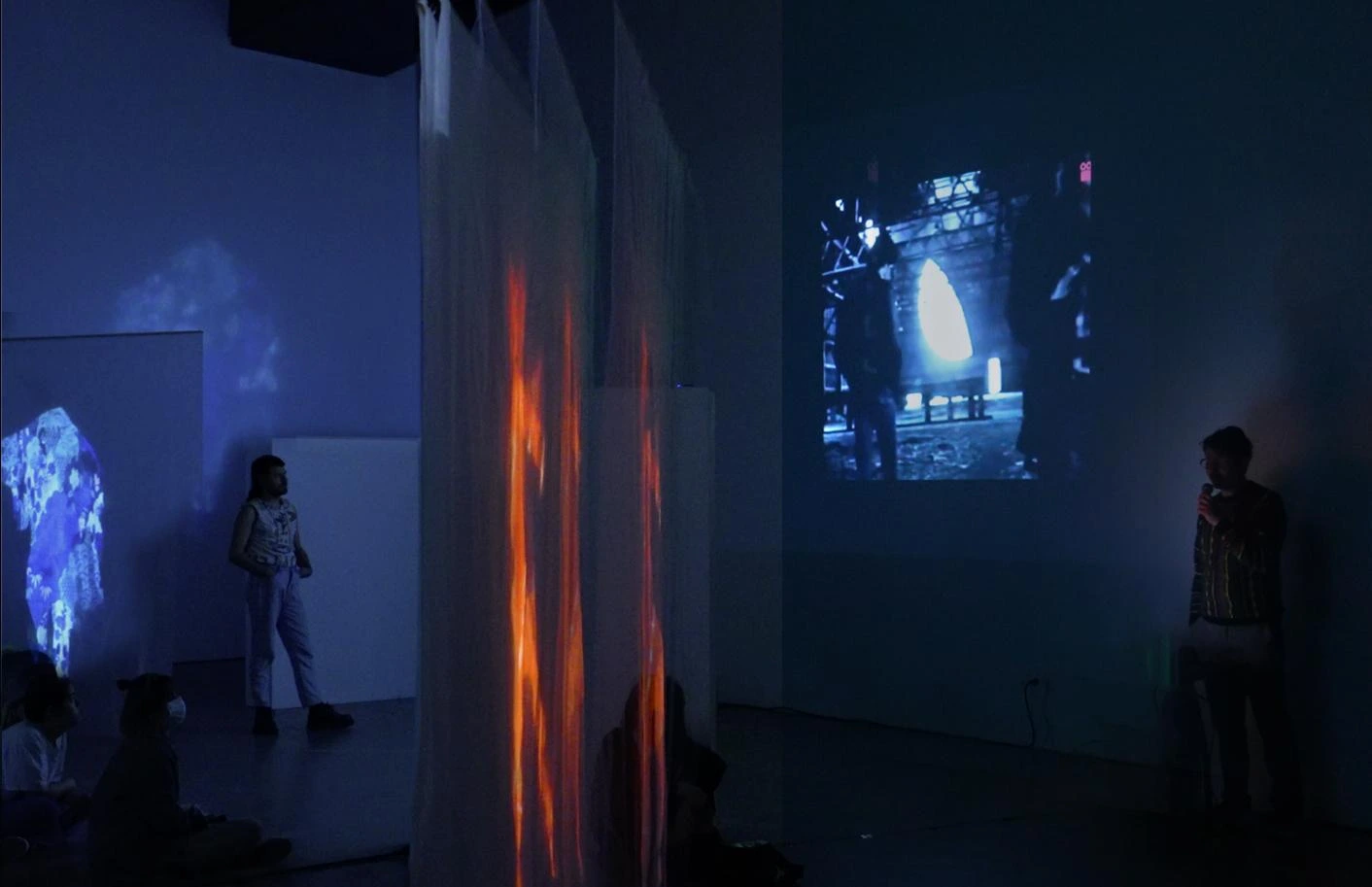
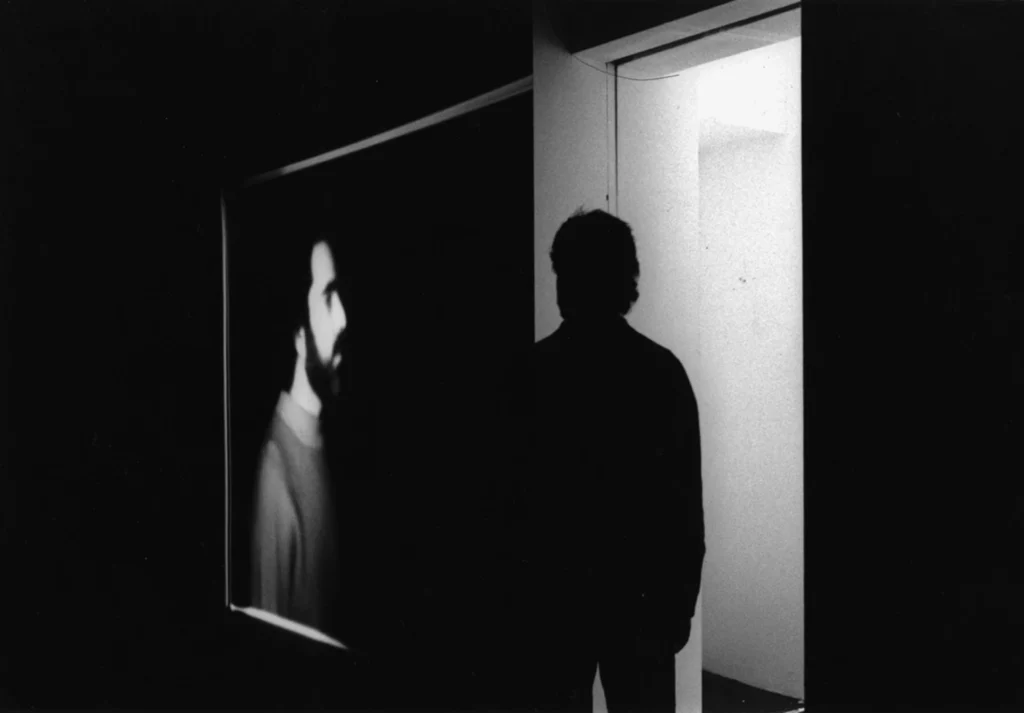
Excerpt of I’ll lick the fog off your skin, videos showcased during “Cruising as critical medothology” seminar at London Conference on Critical Thought, University of London.

Cruising is a mode of relationality that privileges chance, the fleeting, and surprise.

Dim lighting fosters encounters that are less dependent on conventional standards of beauty. Cruising is a choreography of glances. Eye contact drives the movement of bodies, set into motion by surprise and the intensity of the ephemeral.

Emmanuel experiments with how transforming the practices and imaginaries of cruising can reshape the experience of art. On stage and within installations, cruising becomes a strategy for bringing bodies into relation (the bodies of spectators, performers, as well as image-bodies). Vision is unsettled by darkness, sharpening the other senses and intensifying the perception of presences in the night. Emmanuel turns cruising into a choreographic tool that places the bodies of dancers under tension, fosters a sensory awakening, and creates a state of alertness in the audience —that is, a readiness to open up to surprise.

Can the spectator’s experience be permeated by cruising, to the point of transforming their relationship to looking, to desire, and to the unknown?

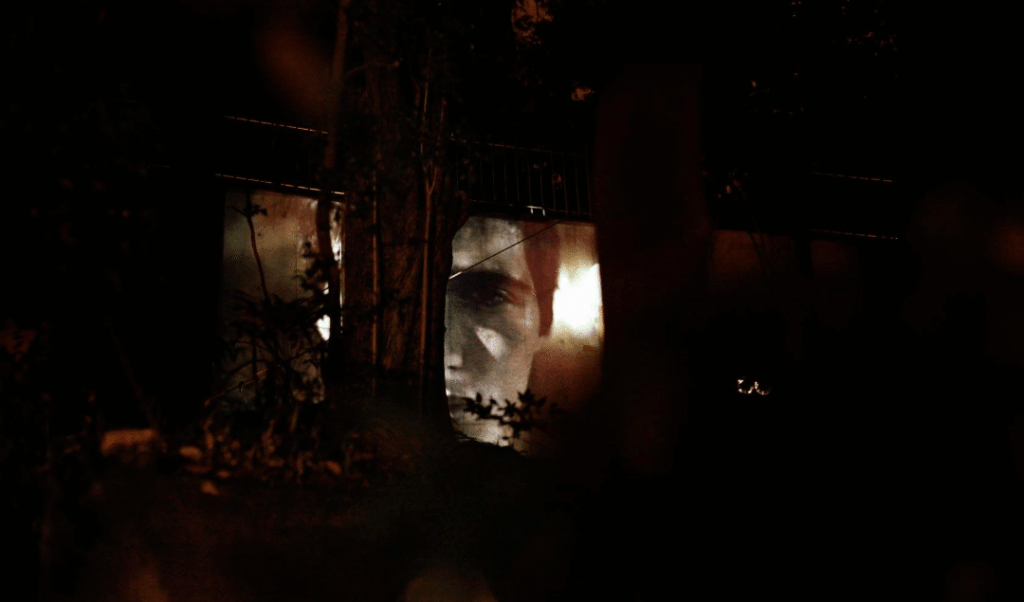
Cruising inside the site specific installation “Until the sun rises”, version 2010 in the gardens of the former French Embassy in Tokyo.

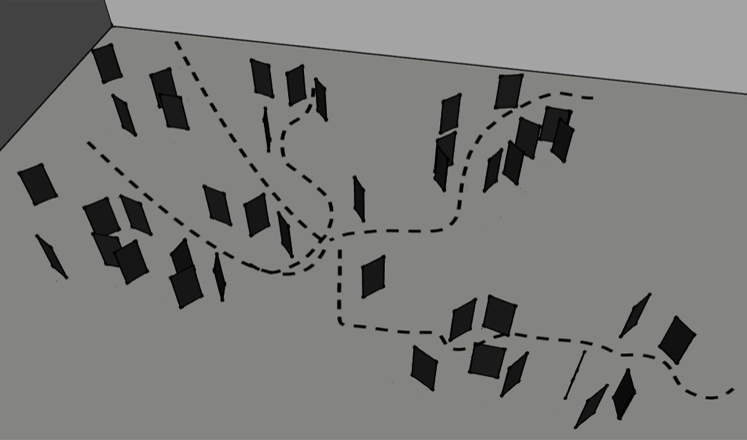
Cruising as a strategy for choreographing images and visitors’ movements (preliminary diagram of the installation at the Collection Lambert).

Can artworks cruise spectators? Can the audience cruise dance?

Cruising and the Experience of Art, a performative lecture at the École Supérieure d’Arts et Médias in Caen.
Screenings: excerpts from I’ll Lick the Fog Off Your Skin (Chapter 1) and a view of Day’s End by Gordon Matta-Clark in a scene from the gay porn film Piers Group.

Workshop of Desires

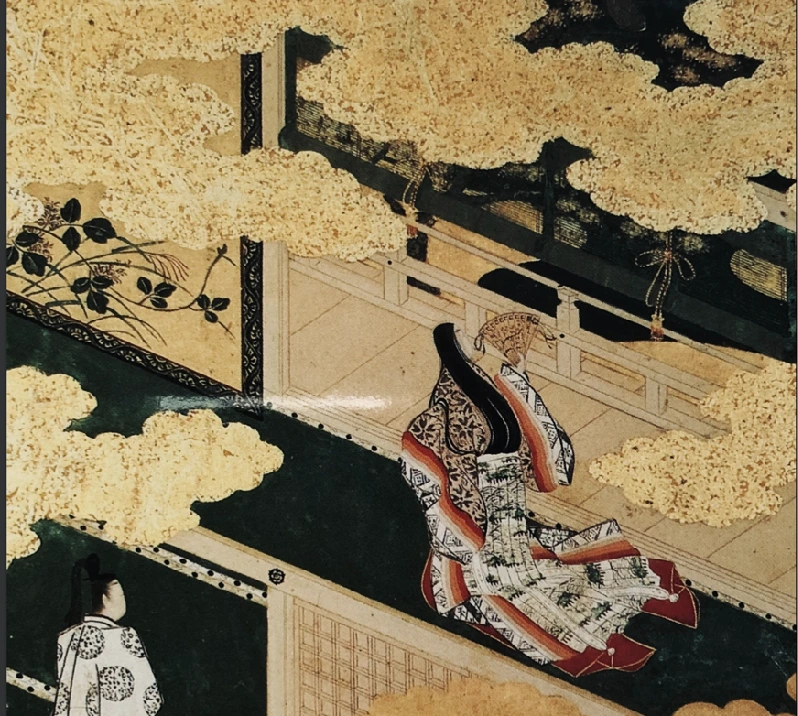
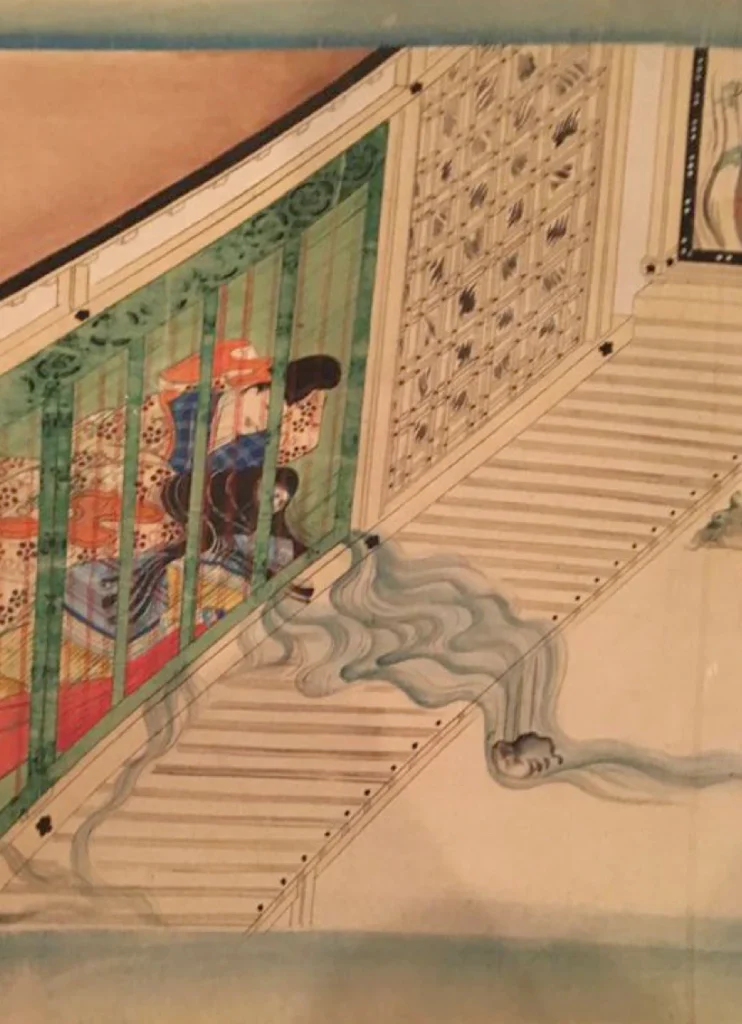
Movement of bodies and gazes in The Tale of Genji, 11th century.

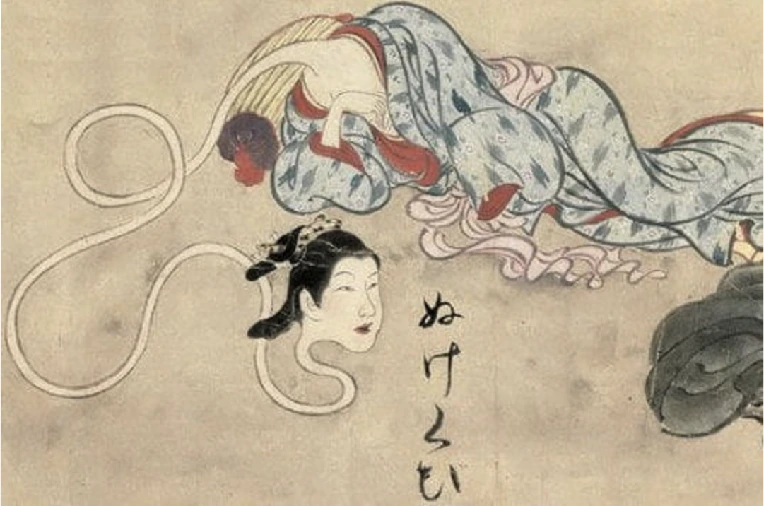
Sawaki Suushi, Hyakkai-Zukan (Scroll of Drawings of One Hundred Demons), 1737.

The lover transformed into a stream, an illustrated scroll from The Tale of Haseo, 18th century.

During a residency at Villa Kujoyama (Kyoto), Emmanuel conducted research on conceptions of desire rooted in ancient Japan, in collaboration with the dancer Takao Kawaguchi (member of Dumb Type, creator of About Kazuo Ohno at the Théâtre de la Ville).

The mythology associated with the forest on the edge of the Villa tells that the world of humans and that of animist spirits intersect there. It inspired their research. Desire is conceived there as a fluid force with multiple potentials. Ghosts, creatures tied to natural elements, and the sensual sensations experienced by a body immersed in water or caressed by the wind nourish the imagination.

In an era when apps and digital platforms are working to shape our emotions and standardize our dreams, it seems essential to open ourselves up to other foundational narratives. This exploration informs not only the creation of the series of works *I’ll lick the fog off your skin*, but also numerous workshops held at art schools and theaters around the performances.

« We are not queer. We may never reach a queer state of consciousness, but we can feel it as the warm illumination of a horizon imbued with potentialities. »

José Esteban Muñoz, Cruising Utopia

phantasmagorias, spaces for a queer circulation of affects

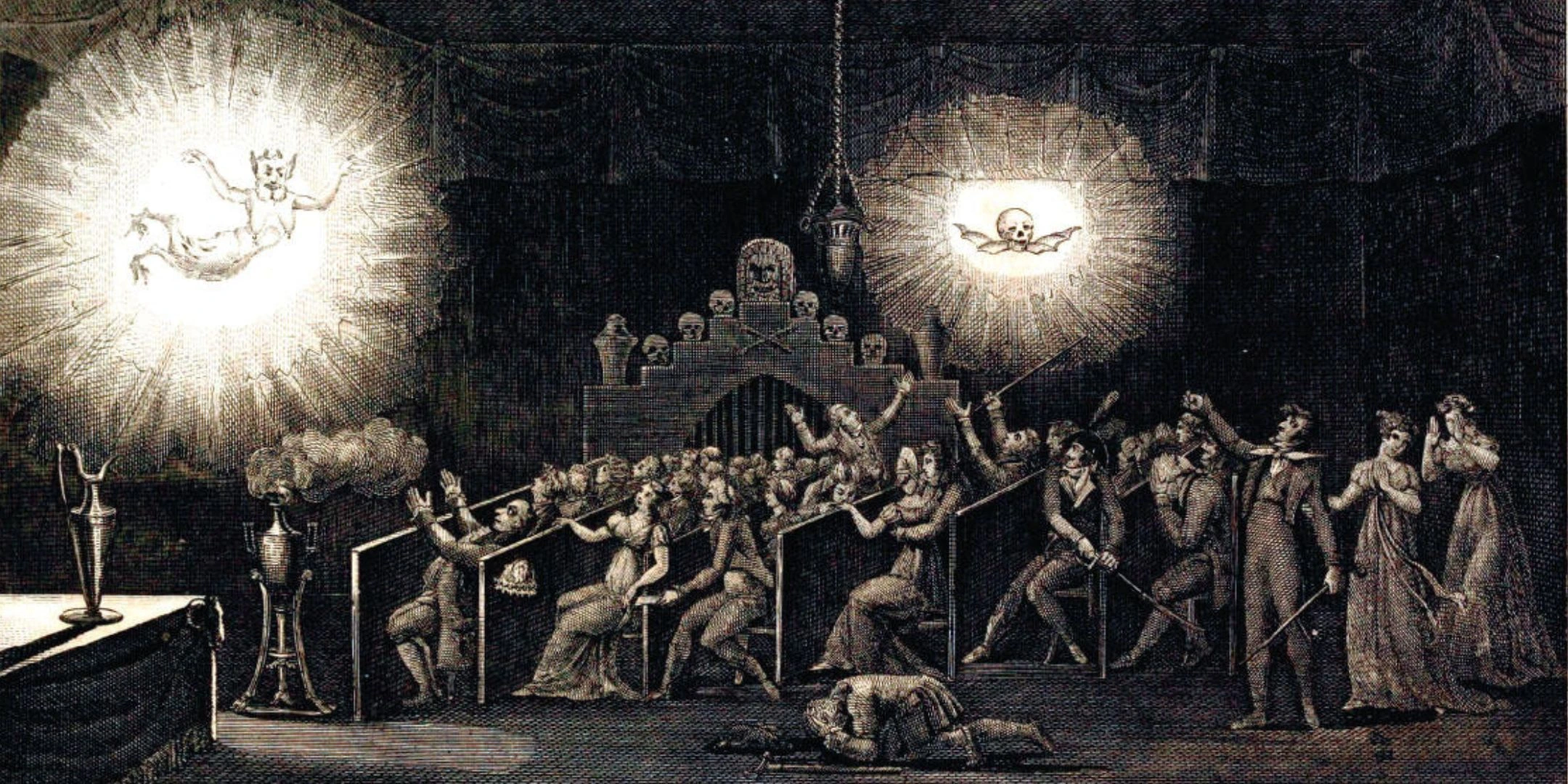
Robertson’s Fantasmagoria in the Cour des Capucines in 1797, Engraving by Lejeune.

The research titled Fantasmagories: spaces for a queer circulation of affects questions the spaces of the stage and the exhibition room. By analyzing the scenography of late eighteenth-century phantasmagorias and examining the position of spectators within them, Emmanuel proposes strategies through which the stage can become an environment that fosters free association, the disordered experience of affects and thoughts in constant reinvention.

This work draws both on the theoretical propositions of Noam Elcott (professor of art archaeology at Columbia University) and Renate Lorenz (author of Art Queer: A Freak Theory), on the analysis of phantasmagorical dispositifs (in the late eighteenth-century shows of the same name, as well as in the works of Gary Hill, Apichatpong Weerasethakul, and Teiji Furuhashi / Dumb Type), and on Emmanuel’s own creations.

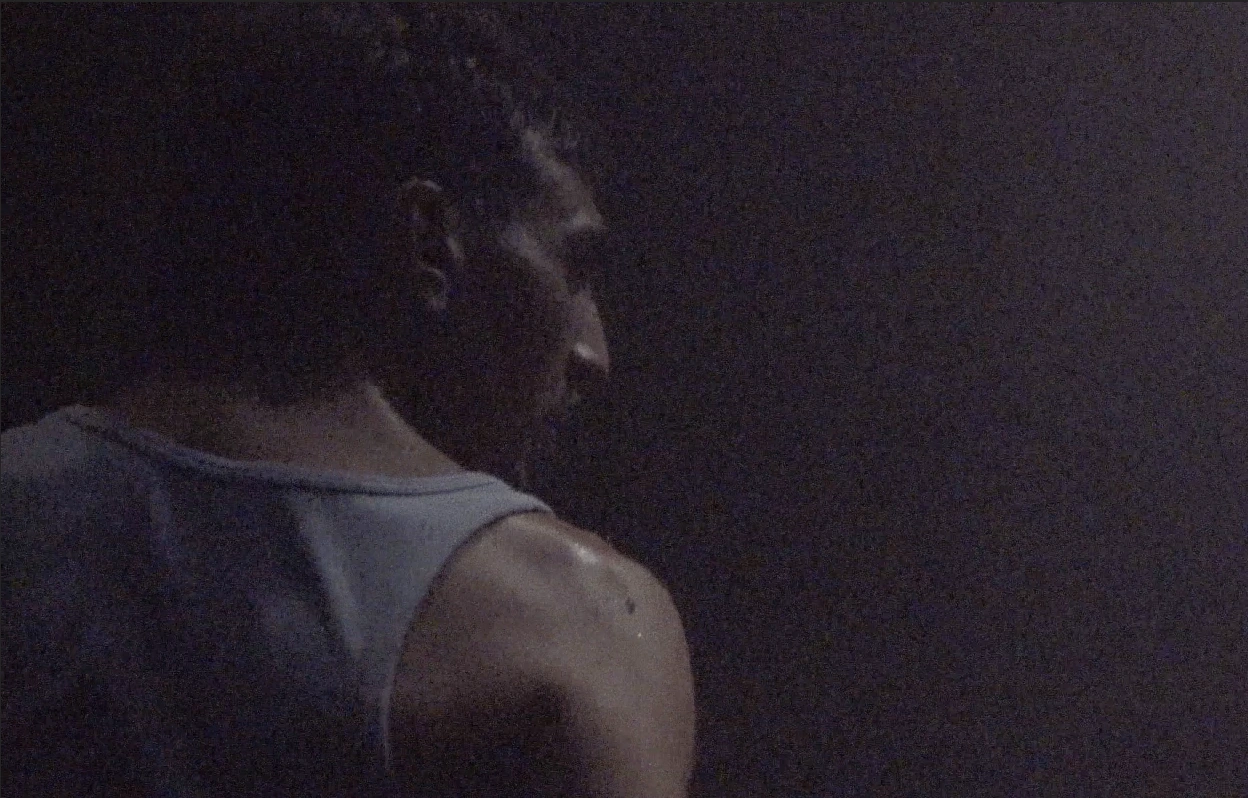
Emmanuel proposes strategies to rethink the stage as a space shared between spectators, dancers, and images: a space in which each of these bodies is conceived as a choreographic subject. An architecture of disturbance that allows the unthinkable to emerge.

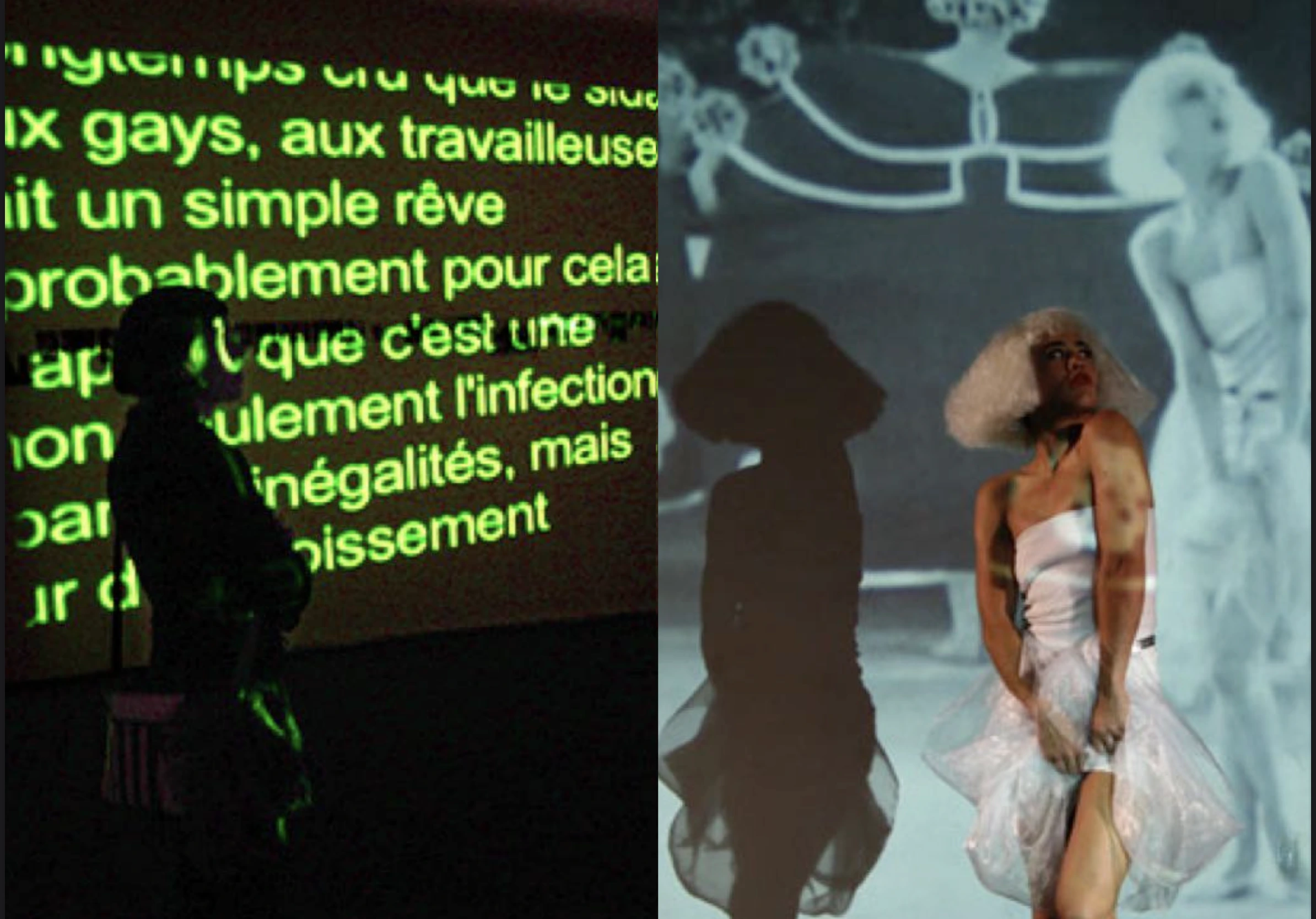
Left: Yann Beauvais, Tu Sempre, installation view at La Criée; right: Pauline Boudry & Renate Lorenz, Salomania, installation view, Kadist Collection.

Excerpt from an engraving depicting an optical experiment, William James Gravesande, Mathematics Elements of Natural Philosophy, 1737.

Peter Campus, dor, San Francisco Museum of Modern Art.

Left: Teiji Furuhashi (Dumb Type), Lovers, installation view at MoMA.
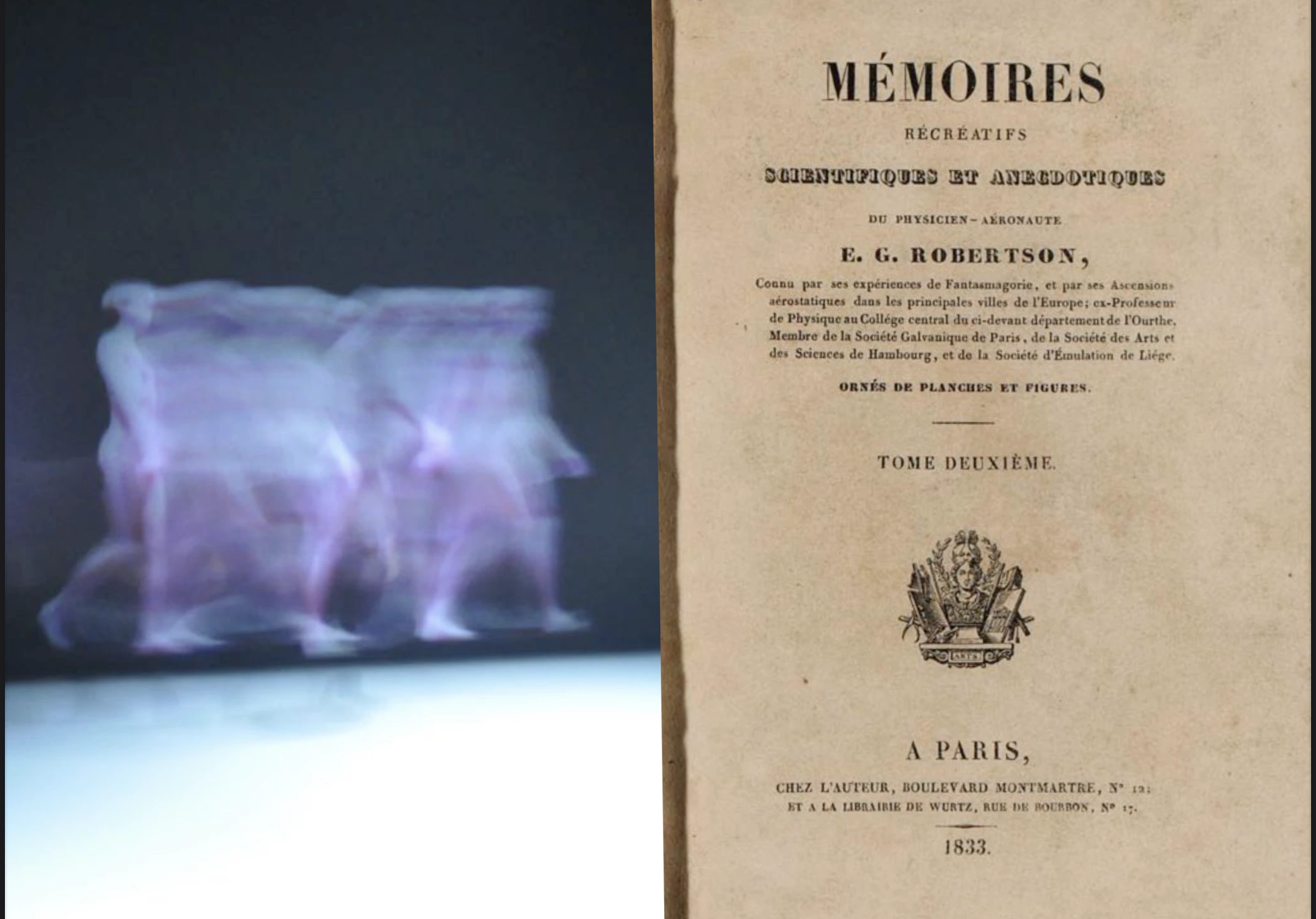
Right: Étienne-Gaspard Robert, known as Roberston, fathers of phantasmagoria,  Recreational, Scientific, and Anecdotal Memoirs, 1831, Collections of the National Library of France.

projects

Gallery of the Caen School of Arts and Media

KLAP, Center for Dance, Marseille


Lambert Collection, Avignon

ongoing project

La Plateforme, Contemporary Art Laboratory, Dunkirk

Château Coquelle, Dunkirk Photography Encounters

Fondazzjoni Kreattività
Malta, European Capital of Culture

from 2017 to 2018

Le Point Éphémère, Paris

2015

Tokyo Photographic Research

Tokyo Art and Space (TOKAS)

Institut français, Tokyo
Solo exhibition

from 2012 to 2021

FRAC (Regional Art Fund) Normandy

Singapore Art Museum

Museum of Contemporary Art, Tokyo

from 2009 to 2026

projects

Gallery of the Caen School of Arts and Media

KLAP, Center for Dance, Marseille

Lambert Collection, Avignon

ongoing project

La Plateforme, Contemporary Art Laboratory, Dunkirk

Château Coquelle, Dunkirk Photography Encounters

Fondazzjoni Kreattività
Malta, European Capital of Culture

from 2017 to 2018

Le Point Éphémère, Paris

2015

Tokyo Photographic Research

Tokyo Art and Space (TOKAS)

Institut français, Tokyo
Solo exhibition

from 2012 to 2021

FRAC (Regional Art Fund) Normandy

Singapore Art Museum

Museum of Contemporary Art, Tokyo

from 2008 to 2026

projects

Gallery of the Caen School of Arts and Media

KLAP, Center for Dance, Marseille

Lambert Collection, Avignon

ongoing project

La Plateforme, Contemporary Art Laboratory, Dunkirk

Château Coquelle, Dunkirk Photography Encounters

Fondazzjoni Kreattività
Malta, European Capital of Culture

from 2017 to 2018

Le Point Éphémère, Paris

2015

Tokyo Photographic Research

Tokyo Art and Space (TOKAS)

Institut français, Tokyo
Solo exhibition

from 2012 to 2021

FRAC (Regional Art Fund) Normandy

Singapore Art Museum

Museum of Contemporary Art, Tokyo

from 2008 to 2026

projects

Gallery of the Caen School of Arts and Media

KLAP, Center for Dance, Marseille

Lambert Collection, Avignon

ongoing project

La Plateforme, Contemporary Art Laboratory, Dunkirk

Château Coquelle, Dunkirk Photography Encounters

Fondazzjoni Kreattività
Malta, European Capital of Culture

from 2017 to 2018

Le Point Éphémère, Paris

2015

Tokyo Photographic Research

Tokyo Art and Space (TOKAS)

Institut français, Tokyo
Solo exhibition


from 2012 to 2021

FRAC (Regional Art Fund) Normandy

Singapore Art Museum

Museum of Contemporary Art, Tokyo


from 2008 to 2026

infos

I build dark, labyrinthine spaces Made of synchronized projections that cut into the night and the silence.

Shifting performative strategies, I work on the interrelationships between three movements: those of the images Floating in the dark, the shadows of the visitors and the bodies of the performers, which can interfere.

Conceived in situ, my works are linked to minority positions, experiences, affects or desires. Or, more precisely, they seek to engage visitors in a “becoming a minority”.

The images are projected onto rough veils, mirrors, glass wool or concrete. These textures rub the images, dull them. The photographic truth becomes uncertain. The projection becomes phantasmagorical material.

I believe in the political and poetic power of shadow theaters and murky architectures.

infos

I build dark, labyrinthine spaces Made of synchronized projections that cut into the night and the silence.

Shifting performative strategies, I work on the interrelationships between three movements: those of the images Floating in the dark, the shadows of the visitors and the bodies of the performers, which can interfere.

Conceived in situ, my works are linked to minority positions, experiences, affects or desires. Or, more precisely, they seek to engage visitors in a “becoming a minority”.

The images are projected onto rough veils, mirrors, glass wool or concrete. These textures rub the images, dull them. The photographic truth becomes uncertain. The projection becomes phantasmagorical material.

I believe in the political and poetic power of shadow theaters and murky architectures.

selection of press articles,
documents and talks

selection of press articles,
documents and talks

Media name

Media name

Media name

Media name

00 january 2023
Author name
Article name
00 january 2023
Author name
Article name
00 january 2023
Author name
Article name
00 january 2023
Author name
Article name

Media name

Media name

Media name

00 january 2023
Author name
Article name
00 january 2023
Author name
Article name
00 january 2023
Author name
Article name

Media name

Media name

00 january 2023
Author name
Article name

00 january 2023
Author name
Article name

Media name

Media name

00 january 2023
Author name
Article name

00 january 2023
Author name
Article name

Media name

00 january 2023
Author name
Article name

Graphic design : Arp is Arp Developpement : WebAlt-g


Graphic design : Arp is Arp 
Déeveloppement : WebAlt-g